A Smart Factory Is a Learning Factory, Not Just a Highly Automated One
A smart factory is a manufacturing environment where machines, sensors, software, workers, and planning systems continuously exchange information. The goal is not simply to install more robots or dashboards; the goal is to make the factory more aware of what is happening and better able to respond. AI-driven manufacturing uses that awareness to predict failures, adjust schedules, inspect quality, optimize energy, support operators, and improve decisions before problems become expensive disruptions.
A: Connected data, AI-supported decisions, responsive workflows, and human oversight.
A: No. It can include automation, but people remain central to decisions and improvement.
A: A measurable pain point such as downtime, defects, energy waste, or scheduling instability.
A: They let teams test scenarios before making physical changes.
A: Operators and technicians understand real conditions that data may not explain.
A: Yes, by starting with one asset, line, or process problem.
A: Acting on unreliable data or models that drift after deployment.
A: It detects patterns and defects earlier, then helps trace causes.
A: No. It helps maintenance teams plan and prioritize better.
A: A factory that learns continuously and improves uptime, quality, safety, and efficiency.
The Core Idea Behind a Smart Factory
Traditional automation follows fixed instructions, which can be powerful when production is stable and variation is limited. Smart factories go further by collecting live data from machines, materials, tools, and workflows, then using that data to understand how the system is behaving. This turns the factory into a feedback environment where every shift, defect, delay, and maintenance event can teach the next decision.
The practical difference is responsiveness. If a machine begins to vibrate differently, a smart factory can alert maintenance before failure. If quality begins drifting, the system can help teams trace the issue before a full batch is affected. If demand changes, planners can compare scheduling options with better visibility into constraints.
A useful way to understand the shift is to think about latency. In a conventional plant, teams may learn about a problem after a batch fails, after a machine stops, or after a customer complains. In a smart factory, the goal is to shorten that delay so signals are visible while there is still time to act. That faster feedback loop is where AI-driven manufacturing begins to feel different from ordinary automation.
AI Connects the Factory’s Signals
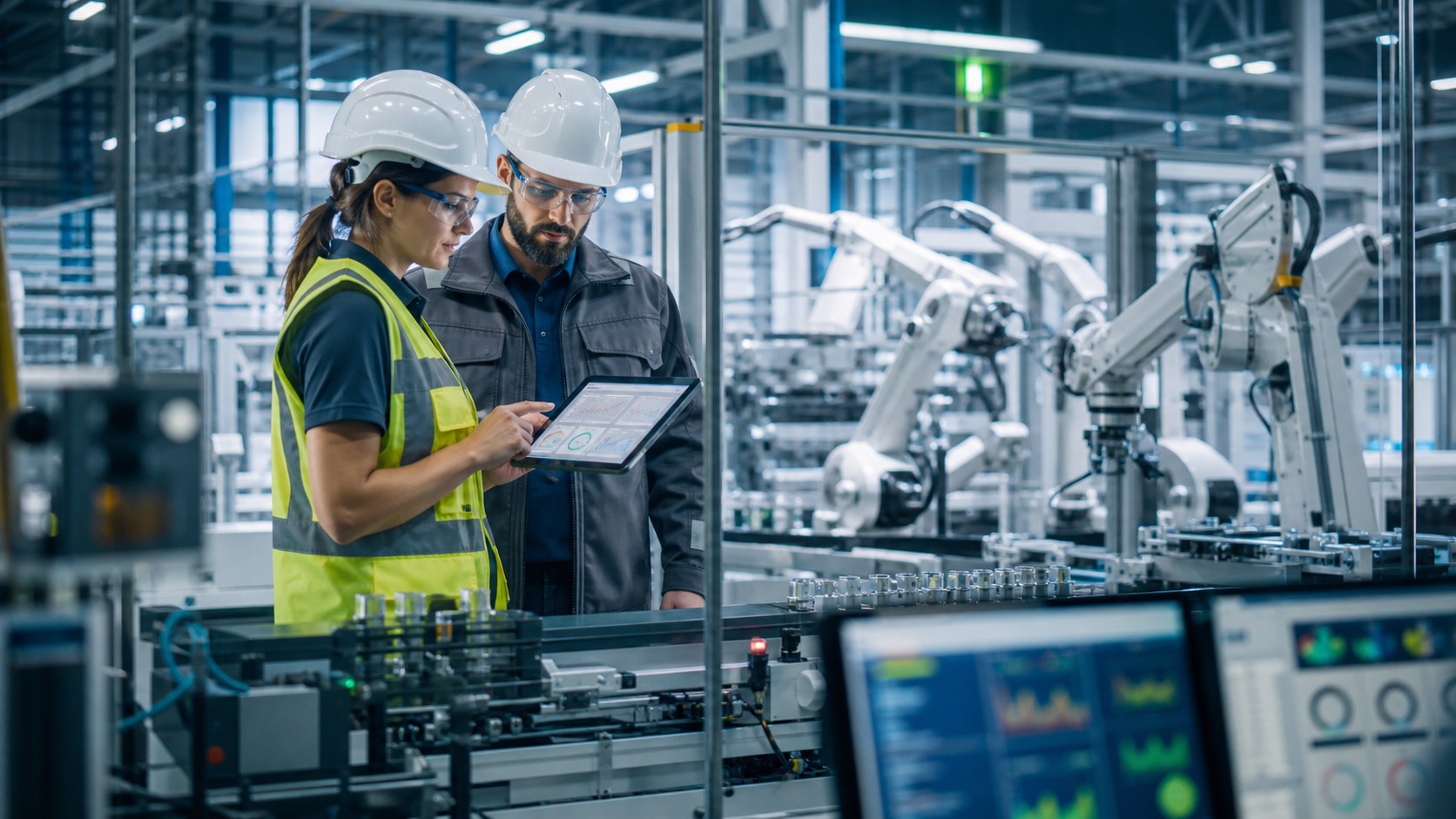
Sensors produce data, but data alone does not make a factory smart. AI helps connect signals that would otherwise remain separate: machine health, inspection images, energy draw, operator feedback, supplier timing, production history, and order priorities. By combining those signals, teams can see patterns that are hard to detect from one dashboard or one department.
This connection matters because factory problems are rarely isolated. A quality issue may come from material variation, tool wear, temperature, a rushed changeover, or a supplier substitution. AI can help narrow the investigation so engineers and operators spend less time guessing and more time fixing the process.
Digital Twins Let Teams Test Before They Disrupt
A digital twin is a virtual model of a machine, production line, or facility that reflects real operating data. In a smart factory, digital twins let teams test changes before they touch the physical floor. Leaders can compare layouts, cycle times, maintenance windows, or demand scenarios without interrupting the current production run.
The best digital twins are living models, not one-time simulations. They need current data, updated assumptions, and feedback from the people who know the line. When the virtual model stays connected to reality, it becomes a safer place to explore improvements and understand tradeoffs.
The connection layer also changes how departments work together. Maintenance, quality, planning, engineering, and operations often see different pieces of the same issue. AI can help reveal that a maintenance signal, quality drift, and schedule pressure are related rather than separate problems. When teams share that view, root-cause work becomes faster and less political.
Robotics Become More Adaptable
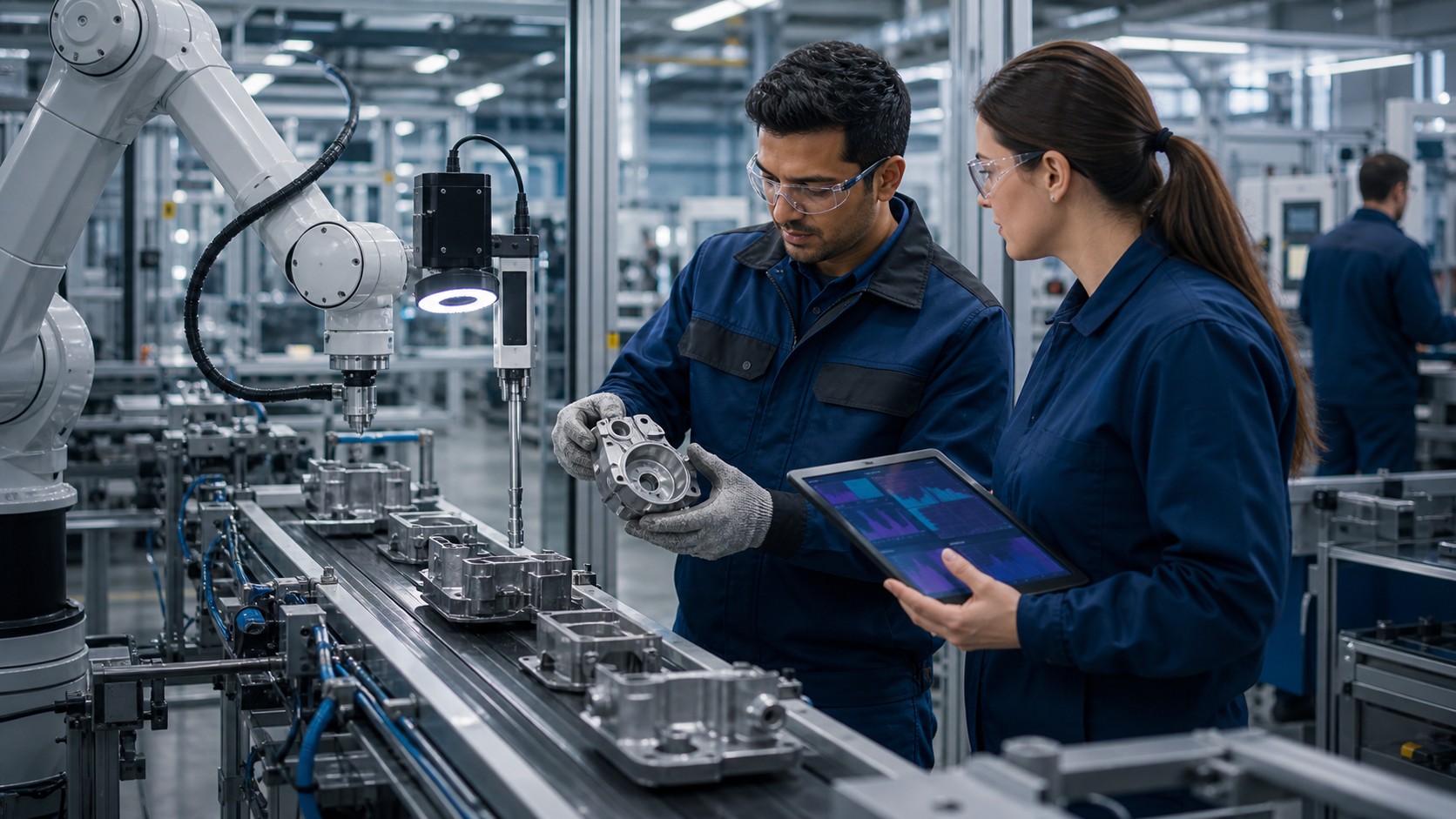
Robots have been part of manufacturing for decades, but smart factories make robotic systems more flexible. Vision systems, AI planning, and better sensors can help robots handle variation in part position, product mix, or assembly conditions. This matters for manufacturers that cannot rely on long, unchanging production runs.
Adaptability does not remove the need for safety and process discipline. Workers need to understand what a robot is expected to do, how it reacts to change, and when a human should intervene. Smart factories succeed when robotics become more useful without becoming unpredictable to the people around them.
Quality Control Moves Upstream
In a smart factory, quality is not only checked at the end of the line. AI-assisted inspection can detect defects during production and connect those defects to process conditions. That gives teams a chance to correct drift earlier, reduce scrap, and prevent rework from piling up.
This upstream approach changes the role of quality teams. Instead of only catching bad products, they can identify the conditions that create bad products. The result is a more preventive quality culture, where inspection data becomes part of process improvement rather than a final gate.
Digital twins are especially valuable when leaders are considering changes with real cost. Moving equipment, changing line speed, or altering staffing patterns can create hidden bottlenecks. A simulation does not remove the need for judgment, but it gives teams a safer environment to compare options. The best results come when engineers test scenarios and operators challenge the model with floor reality.
Predictive Maintenance Protects Flow
Predictive maintenance is one of the most practical smart factory use cases because downtime has a direct cost. AI models can watch vibration, heat, pressure, current, sound, runtime, and maintenance history to estimate when equipment needs attention. This lets teams plan service before failure stops the line.
The value is operational calm. Maintenance crews can schedule work, parts can be prepared, and production planners can adjust around known windows. Smart factories do not eliminate breakdowns, but they reduce the number of surprises that force teams into crisis mode.
Planning Becomes More Dynamic
Manufacturing planning involves orders, materials, labor, equipment, maintenance, quality, and delivery commitments. In a smart factory, AI can help planners compare options when conditions change. A supplier delay, rush order, machine warning, or staffing constraint can be evaluated against the whole production system.
Dynamic planning does not mean a machine makes every decision. It means planners can see consequences faster. They can understand which orders are affected, which constraints matter most, and which tradeoffs leadership must approve. That makes planning more transparent and less dependent on heroic manual reshuffling.
Robotic flexibility also makes smart factories more attractive to companies with product variety. Many manufacturers cannot justify fixed automation for every small run, special order, or seasonal product. AI-guided robotics can reduce that barrier by helping equipment adapt to controlled variation. That does not make the line effortless, but it makes automation less brittle.
People Remain Central to the Smart Factory
The future factory still depends on people because manufacturing knowledge lives in experience. Operators hear machine behavior, technicians understand failure patterns, quality specialists define acceptable variation, and supervisors know where process rules meet human reality. AI can capture and amplify that expertise, but it cannot replace the judgment built on years of factory work.
Smart factory programs should therefore include training and worker feedback from the beginning. If the people closest to the line do not trust the data or understand the alert, adoption will stall. The strongest implementations make skilled workers more effective rather than asking them to obey a mysterious system.
What the Future Looks Like
The future of AI-driven manufacturing is a factory that learns from itself. Equipment performance, quality outcomes, energy use, schedule changes, and human feedback all become part of a continuous improvement loop. Each loop gives the organization a better chance to avoid waste, protect safety, and deliver reliably.
That future is not only for giant manufacturers. Smaller factories can begin with one machine, one inspection point, one maintenance problem, or one scheduling bottleneck. A smart factory is built by connecting useful signals to better decisions, one practical use case at a time.
Quality data becomes more valuable when it is shared quickly. If inspection findings stay inside a quality report, the line may keep producing the same defect. If inspection findings connect to process settings, machine condition, and material history, teams can intervene sooner. That is how a smart factory turns quality from a checkpoint into an operating signal.
How to Build Toward a Smart Factory
A smart factory roadmap should begin with a problem the business already understands. Downtime, defects, energy waste, bottlenecks, and schedule instability are better starting points than a vague desire to become advanced. When the problem is concrete, the team can identify the data, equipment, owners, and measures that matter.
The next step is trust-building. Operators and technicians need to see that the system reflects the real factory and that their corrections matter. If the model flags issues that experienced workers know are harmless, the team should tune the workflow rather than blame the people. Trust grows when AI becomes a practical assistant.
Leaders should also plan for integration. A warning that sits in a separate dashboard may not change behavior. A warning that creates a maintenance work order, alerts the right supervisor, and records the response is more likely to improve performance. Smart factories depend on connected action, not only connected data.
The future of AI-driven manufacturing will be built in increments. A factory becomes smarter when one signal leads to one better decision, and that decision becomes part of the operating rhythm. Over time, those loops create a plant that learns faster than its competitors.
That incremental path also makes investment easier to defend. Each use case can show what changed, how the team responded, and whether the outcome improved. A smart factory is built through evidence, not slogans.
The Practical Starting Point
The practical starting point is a factory conversation, not a technology demo. Leaders should ask where the plant loses the most time, material, confidence, or safety margin. That discussion usually points toward a first use case that people already care about, which makes adoption easier.
Once the use case is chosen, the team should inspect the data behind it. A predictive maintenance project needs trustworthy condition data, while a quality project needs reliable image capture and defect labels. Cleaning that foundation may feel slow, but it prevents the smart factory from learning the wrong lessons.
The final ingredient is a response plan. If the system predicts failure, flags a defect, or suggests a schedule change, someone must know what to do. Smart factories are not smart because they produce alerts; they are smart because the organization acts on the right alerts in time.
This is why the best smart factory projects feel practical from the start. They improve one operational loop, prove value, and then expand to the next loop. Over time, the factory becomes more adaptive without losing the discipline that made manufacturing reliable in the first place.
What Leaders Should Remember
Smart factory progress depends on patience because every plant has its own constraints. Equipment age, data availability, workforce skills, product mix, and supplier reliability all shape what AI can do first. Leaders who respect those constraints build better systems than leaders who copy another company’s roadmap.
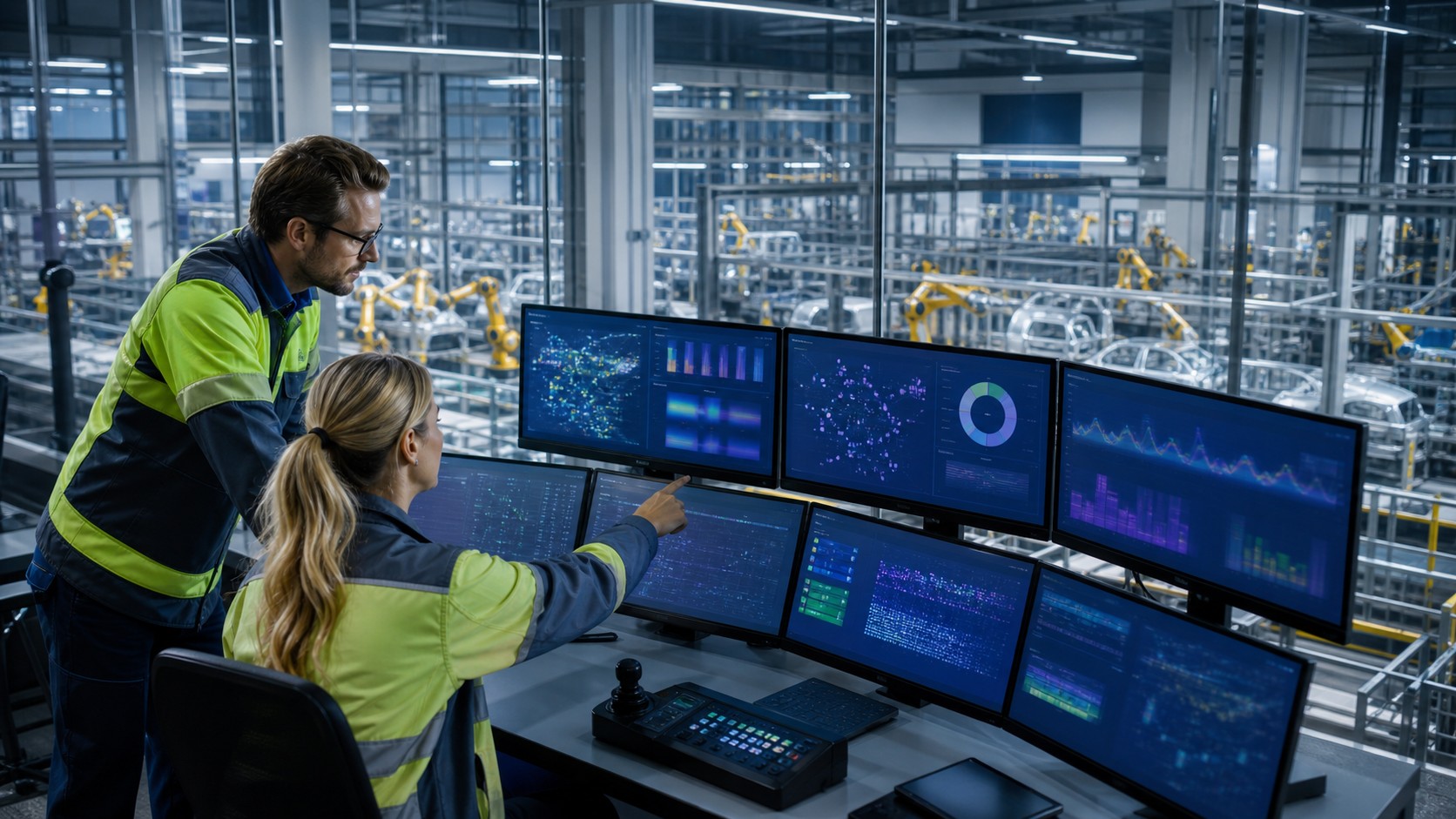
The most useful smart factory investments also create shared visibility. When maintenance, quality, planning, and operations see the same facts, they can solve problems together instead of defending separate reports. AI helps most when it turns scattered signals into a common operating picture.
The future of AI-driven manufacturing is therefore practical, not theatrical. It will be measured in uptime, yield, safety, energy use, and delivery confidence. Those outcomes matter more than whether the factory looks futuristic from the outside.