AI Manufacturing Automation Is Moving From Fixed Rules to Adaptive Operations
Manufacturing automation used to mean machines following fixed instructions with impressive consistency. AI is changing that model. In 2026, factories are using AI to predict equipment failure, inspect quality through machine vision, adjust production schedules, guide robots, optimize energy use, simulate changes with digital twins, and help technicians understand what needs attention first. The transformation is not a factory without people. It is a factory where people, machines, sensors, and software work in a tighter feedback loop. AI helps manufacturing systems notice variation, learn from patterns, and respond before small problems become expensive stoppages.
A: It changes tasks, but skilled human oversight remains essential.
A: Using data patterns to service equipment before failure.
A: Machine vision can detect defects and process drift at speed.
A: Most still require safety design, training, supervision, and constraints.
A: A virtual model of a machine, line, or process used for simulation.
A: Yes, by identifying scrap patterns, energy inefficiency, and process drift.
A: A costly, measurable problem with reliable data and clear ownership.
A: They understand real constraints that models may miss.
A: Deploying tools that create alerts without practical action paths.
A: Better uptime, quality, safety, planning, and worker decision support.
Predictive Maintenance Reduces Surprise Downtime
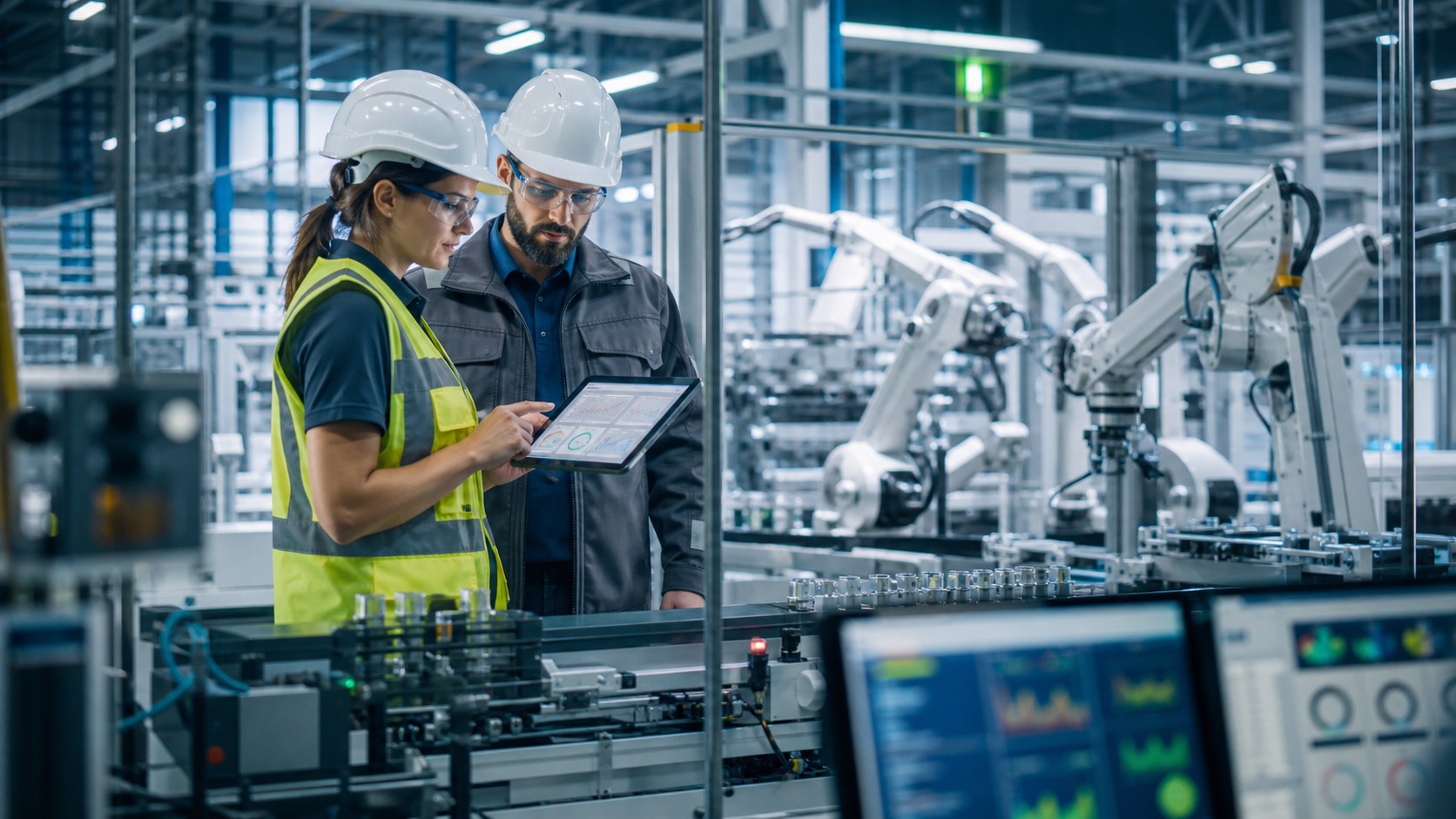
Downtime is one of the most expensive problems in manufacturing. AI predictive maintenance systems analyze vibration, temperature, pressure, sound, cycle time, energy draw, and maintenance history to identify equipment that may fail soon. This helps teams service machines before breakdowns interrupt production.
The benefit is not just fewer repairs. Predictive maintenance can reduce rushed overtime, spare-parts chaos, missed orders, and safety risk. A planned shutdown is usually cheaper and safer than an unexpected failure during a critical run.
The system needs good data and technician feedback. A model may detect an anomaly, but maintenance experts know whether the signal matches a bearing issue, calibration drift, operator behavior, or sensor fault. AI improves maintenance when it supports, rather than bypasses, practical experience.
Predictive maintenance also changes the maintenance culture. Instead of rewarding heroic repairs after a breakdown, manufacturers can reward prevention, planning, and root-cause learning. That shift can reduce stress on technicians and make production more reliable.
Machine Vision Raises Quality Control
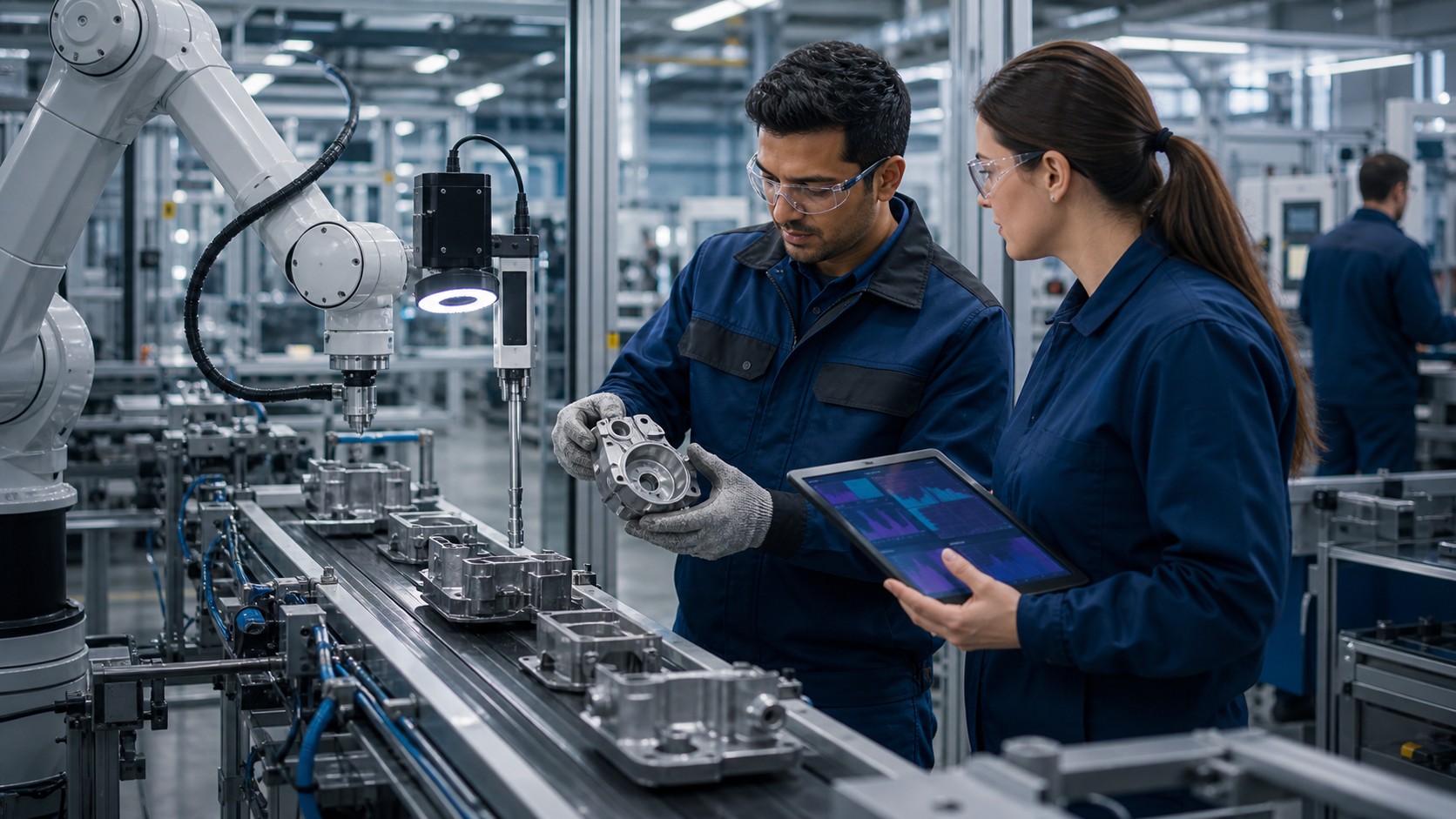
Machine vision systems can inspect products for defects, surface flaws, alignment problems, packaging issues, and assembly errors. AI improves these systems by learning visual patterns that older rule-based inspection might miss. This is especially useful when defects are subtle or vary in appearance.
Quality control becomes faster and more consistent when inspection happens continuously. A system can catch drift early, before thousands of flawed units are produced. It can also help teams understand whether defects cluster by machine, supplier batch, shift, or environmental condition.
Human quality specialists remain essential. They define acceptable variation, review borderline cases, investigate root causes, and decide when process changes are needed. The camera can see more, but people still decide what quality means.
Robotics Become More Flexible
Industrial robots have long been powerful but rigid. AI is helping robots adapt to variation in parts, placement, grip, and environment. Collaborative robots can work near people in some settings, while vision-guided systems can handle tasks that require more flexibility than fixed automation.
This flexibility matters for manufacturers with shorter product cycles, customization, or mixed production lines. Instead of rebuilding automation for every change, teams can train and adjust systems more quickly. That can make automation practical for a broader range of factories.
Safety must lead. Flexible robots need risk assessments, guarding, emergency stops, training, and clear procedures. AI adaptability should not make machine behavior unpredictable to the people working nearby.
Machine vision is strongest when it connects inspection to process improvement. Detecting a defect is useful; understanding why it appeared is better. AI quality systems should help teams trace defects back to settings, materials, equipment, or environmental conditions.
Scheduling and Planning Become More Responsive
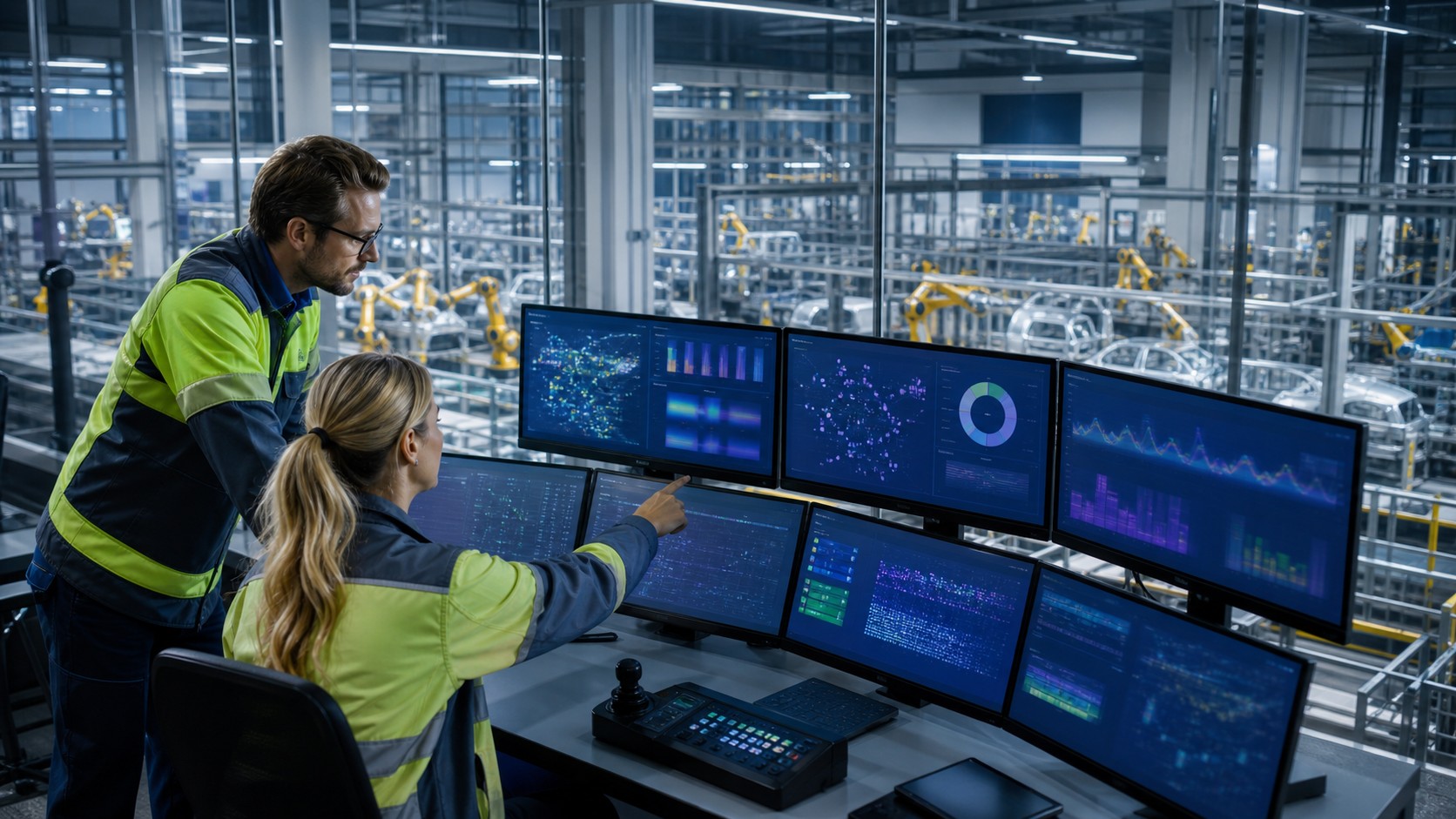
Manufacturing schedules must balance orders, materials, labor, machine capacity, changeovers, maintenance, and delivery promises. AI can help planners evaluate scenarios and respond when something changes: a supplier delay, a rush order, a machine issue, or a labor constraint.
A responsive schedule can protect throughput and reduce waste. Instead of manually rebuilding plans under pressure, planners can compare options quickly. Which line should run first? Which order should move? What happens if maintenance is pulled forward? AI can make those tradeoffs more visible.
Planning tools should include real constraints from the floor. A mathematically efficient schedule that ignores cleaning time, skill mix, forklift availability, or fatigue will fail in practice. Planners and operators need to shape the model.
Digital Twins Help Test Changes Before the Floor Feels Them
A digital twin is a virtual representation of a machine, line, process, or facility. AI can make these simulations more useful by analyzing real operating data and testing scenarios. Manufacturers can explore layout changes, speed adjustments, maintenance timing, or demand shifts before making physical changes.
This reduces risk. A factory can test whether a proposed change creates a bottleneck, increases energy use, or affects quality. Leaders can compare options without disrupting production immediately.
Digital twins are only as useful as their assumptions. If the virtual model does not reflect the real factory, it can create false confidence. Teams should update simulations with current data and frontline feedback.
Flexible robotics can make automation less brittle, but manufacturers should introduce flexibility carefully. Workers need to know what a robot is expected to do, when behavior changes, and how to stop the process safely. Predictability is part of safety.
Energy and Waste Optimization Become Operational Priorities
Manufacturing uses energy, water, materials, and compressed air at scale. AI can identify inefficient equipment, process drift, idle time, scrap patterns, and opportunities to reduce waste. These improvements can lower cost and support sustainability goals.
Energy optimization often requires timing. A system may suggest when to run certain processes, how to reduce peak demand, or where equipment is consuming more than expected. Waste analysis may show which material batches, settings, or conditions produce more scrap.
Savings are strongest when recommendations connect to action. Someone must be able to adjust the process, approve the change, and verify the result. AI insight without operational ownership becomes another report.
Worker Safety Gains Better Signals
AI can support safety by detecting hazardous conditions, monitoring equipment behavior, identifying near-miss patterns, and helping teams review incident data. In some factories, computer vision can identify blocked walkways or unsafe proximity to machines, though privacy and workforce trust must be handled carefully.
Safety AI should be designed with workers, not imposed on them. If employees believe tools are used mainly for surveillance or punishment, trust will collapse. The purpose should be hazard prevention, better training, and safer workflows.
The strongest safety programs combine AI signals with open reporting, human observation, and a culture where workers can stop the line when something is wrong.
Scheduling tools can also reduce conflict between departments. Sales wants delivery speed, operations wants stability, maintenance wants access, and finance wants efficiency. AI can make tradeoffs visible, but leadership still decides which promise matters most.
Supply Chain and Inventory Decisions Get Smarter
Manufacturing automation does not stop at the factory wall. AI can help forecast demand, monitor supplier risk, optimize inventory, and identify logistics disruptions. These signals affect production because a line cannot run without the right materials at the right time.
Inventory optimization is a balancing act. Too much stock ties up cash and space. Too little creates stoppages. AI can help teams compare lead times, demand variability, supplier reliability, and production plans.
The best supply chain tools do not hide uncertainty. They show confidence levels, alternatives, and consequences. Planners need to understand not only the recommended decision, but what could make it wrong.
The Workforce Becomes More Technical and More Important
AI automation changes manufacturing jobs. Some repetitive tasks may shrink, while demand grows for technicians, operators, maintenance specialists, data-literate supervisors, quality engineers, and process experts who can work with intelligent systems.
Training is therefore central. Workers need to understand what the system is measuring, how to respond to alerts, when to override, and how to report problems. A factory cannot become smarter if the people running it are kept in the dark.
The most successful manufacturers will treat AI as a workforce amplifier. They will use it to remove avoidable friction, improve safety, and help skilled people make better decisions faster.
Digital twins become more valuable when they are treated as living models. A factory changes constantly through wear, staffing, product mix, and supplier variation. The virtual representation should be updated as the real operation evolves.
The Factory Becomes a Learning System
The larger transformation is that the factory becomes a learning system. Sensors notice conditions, AI identifies patterns, workers add context, and processes improve. Each loop can make the next production run safer, cleaner, faster, or more reliable.
Manufacturers should resist the idea that intelligence lives only in the software. The best insights often come from experienced operators who know how a machine sounds before it fails or how a line behaves when a supplier changes material. AI should capture and amplify that knowledge.
In 2026, manufacturing automation is becoming less about replacing human skill and more about connecting it to better signals. That is how factories become smarter without becoming blind to the people who keep them running.
A Practical Roadmap for Manufacturers
A practical roadmap starts with one measurable problem: unplanned downtime on a critical asset, recurring defects on one line, energy waste in one process, or scheduling instability in one plant. Starting with a defined problem keeps the AI project grounded in operational value.
The next step is data readiness. Sensors, maintenance logs, quality records, and production histories need to be reliable enough to support decisions. Many projects fail because teams buy software before fixing the information that software depends on.
Manufacturers should then run pilots with operators, technicians, engineers, and supervisors involved from the beginning. These people know which alerts are useful, which recommendations are unrealistic, and which process changes will actually be followed.
Once a pilot proves value, scaling should include training, safety review, integration with maintenance and planning systems, and a clear ownership model. AI manufacturing automation succeeds when it becomes part of daily operations, not a dashboard admired from a conference room.
Reader Takeaway
The practical takeaway for manufacturers is to start with the factory problem, not the AI feature. Uptime, quality, safety, energy, scheduling, and inventory each need different data and ownership.
The strongest projects include the people closest to the line. Operators and technicians know which signals matter and which recommendations will fail under real production pressure.
AI automation succeeds when it turns factory experience into faster learning and better decisions, not when it tries to remove human expertise from the process.
Implementation Lens
A manufacturer beginning with predictive maintenance should choose one asset where downtime cost is clear and sensor data is available. That makes success measurable and gives technicians a concrete reason to engage.
A manufacturer beginning with quality inspection should connect defect detection to root-cause analysis. Catching flaws matters, but the bigger gain comes when teams reduce the conditions that create those flaws.
Across every use case, the implementation question is the same: who acts on the recommendation, with what authority, and how is the result checked? Without that loop, AI insight stops short of automation value.
Manufacturers should also budget for change management. New alerts, inspection rules, and robot behaviors affect daily routines, so supervisors need time to explain what is changing and why it improves the line.
The clearest business cases will connect AI to plant-level results: uptime, yield, scrap reduction, energy use, safety incidents, and delivery performance. Those measures keep automation grounded in operational reality.