
The Most Valuable Healthcare AI Often Works Quietly Behind the Scenes
AI in healthcare is often described with futuristic language, but many of the most important examples are practical and already visible in daily care. AI helps prioritize urgent imaging, flag possible deterioration, summarize records, monitor patients at home, support medication safety, and route messages to the right team. These examples can save lives not because a machine replaces a clinician, but because a signal reaches the right person sooner. In healthcare, minutes, context, and coordination matter. AI earns its place when it helps teams notice risk earlier, reduce avoidable delay, and respond with better information.
A: Yes, especially in imaging, documentation, monitoring, operations, and risk detection.
A: It can support earlier detection and faster response, but clinicians act on the signal.
A: AI helps prioritize scans that may need urgent review.
A: No. They require tuning, validation, and human assessment.
A: No. It extends observation and should connect to care pathways.
A: It can flag risks for clinician or pharmacist review.
A: Clear records support continuity, handoffs, and patient safety.
A: It can identify possible matches, but consent and eligibility require human review.
A: Too many weak alerts that clinicians stop trusting.
A: A useful signal, a clear workflow, and accountable human response.
Imaging Triage Helps Urgent Cases Move Faster
One of the clearest real-world examples is imaging triage. AI tools can analyze scans for patterns associated with urgent conditions and help move suspected critical cases higher in the radiology queue. This can matter for stroke, pulmonary embolism, fractures, hemorrhage, and other time-sensitive findings.
The tool does not replace a radiologist. It helps prioritize attention. A radiologist still interprets the image, considers the clinical context, and communicates findings. The life-saving potential comes from reducing delay in a busy system.
Good imaging AI also supports consistency. It can measure changes, mark regions for review, and help ensure that subtle findings are not buried in volume. The final clinical decision remains human, but the workflow becomes more responsive.
Imaging triage is compelling because the benefit is concrete. A scan that reaches a specialist sooner can change the treatment timeline. The algorithm does not need to be dramatic to matter; it only needs to help the right case receive attention before delay compounds.
Sepsis and Deterioration Alerts Support Earlier Action
Hospitals use predictive systems to identify patients who may be deteriorating before the signs become obvious. Sepsis is a common example because early recognition and treatment are critical. AI can examine vital signs, lab trends, medications, notes, and other data to suggest that a patient needs closer review.
These alerts must be carefully tuned. Too many alerts create fatigue, while missed alerts weaken trust. The best systems connect prediction to a care team response, such as bedside assessment, repeat labs, or escalation to a rapid response process.
The life-saving value is not the prediction alone. It is the combination of signal, workflow, and clinician action.
Remote Monitoring Extends Care Beyond the Hospital
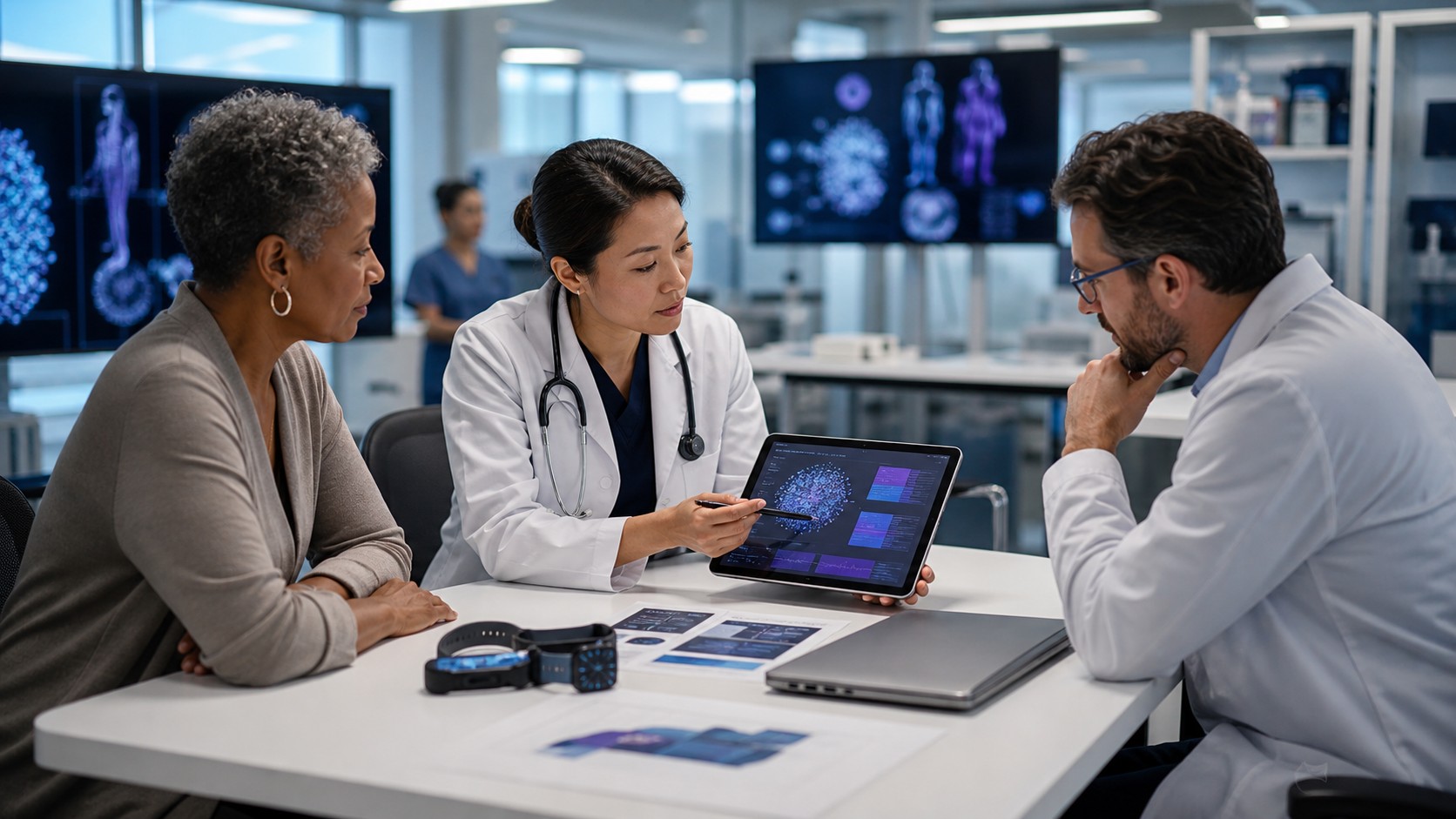
Patients with heart failure, diabetes, hypertension, respiratory disease, or post-surgical recovery needs may use connected devices at home. AI can help identify patterns that suggest worsening symptoms or need for outreach. This can reduce avoidable hospital visits and support earlier intervention.
Remote monitoring is most useful when patients know what will happen with the data. If a reading is concerning, who reviews it? When will the patient be contacted? What should the patient do if symptoms worsen? Clear pathways prevent monitoring from becoming a passive data collection exercise.
For patients, the benefit can feel like reassurance. They remain at home while the care team has a better chance of noticing trouble before it becomes a crisis.
Sepsis systems show why implementation is everything. A hospital can have a strong prediction model and still fail if no team owns the response. The alert must fit staffing, escalation pathways, and bedside practice, or it becomes another item in a crowded inbox.
Medication Safety Gets Another Layer of Review
Medication errors can occur because of allergies, interactions, dosing complexity, duplicate therapy, kidney function, or transitions between care settings. AI can help detect possible conflicts and highlight patients who may need pharmacist review.
This support is especially useful in complex cases. A patient with multiple conditions and many medications may have risk patterns that are difficult to see quickly. AI can help organize those risks for a pharmacist or clinician.
Medication alerts need precision. Clinicians already face alert fatigue from older systems. AI must improve relevance, not simply add another warning. The safest tools learn from reviewer feedback and focus on signals that change action.
Clinical Documentation Frees Time for Care
AI documentation assistants can draft notes from visits, summarize prior history, and prepare after-visit instructions. While documentation may not sound life-saving, clinician time and attention directly affect care quality. Less time fighting paperwork can mean more time listening, examining, and explaining.
Documentation tools also support continuity. A clearer note helps the next clinician understand what happened, what changed, and what follow-up is needed. In fragmented healthcare systems, better information transfer can prevent mistakes.
The note still needs review. A polished draft can be wrong, incomplete, or overly confident. Clinicians should correct it before it becomes part of the medical record.
Remote monitoring also changes the emotional experience of recovery. Patients leaving the hospital often wonder whether a symptom is normal or dangerous. A well-designed monitoring program can provide reassurance while giving care teams a chance to intervene earlier.
Emergency Departments Use AI for Flow and Triage
Emergency departments must make decisions under pressure. AI can support triage, predict crowding, estimate bed demand, identify patients at higher risk, and help coordinate resources. These operational examples can affect outcomes because delays in emergency care ripple across the hospital.
A model might help leaders prepare staffing or open capacity before the waiting room becomes unsafe. It might also identify patients who need faster reassessment. These uses work best when they support clinical judgment rather than replace triage expertise.
Emergency care is complex and human. AI should help teams see pressure points earlier, not reduce patients to scores without context.
AI Supports Pathology and Lab Review
Pathology and laboratory medicine involve pattern recognition, quality control, and high-volume review. AI can help identify suspicious tissue patterns, prioritize slides, detect anomalies, and support quality checks. This can make diagnostic workflows more consistent and efficient.
As with imaging, the tool supports specialists rather than replacing them. Pathologists bring clinical context, specimen knowledge, and diagnostic responsibility. AI can help direct attention, but the diagnosis must remain accountable.
The potential value is earlier and more reliable detection in workflows where volume is high and subtle differences matter.
Medication safety examples remind us that healthcare risk is often cumulative. One drug, one lab value, or one diagnosis may not be alarming alone. The combination can be. AI can help assemble those pieces for pharmacists and clinicians who know how to interpret them.
Research and Trial Matching Reach More Patients
Many patients never hear about clinical trials for which they may be eligible. AI can compare patient characteristics with trial criteria and help research teams identify potential matches. It can also support study design and analysis by finding patterns in complex data.
Trial matching must be handled carefully. Eligibility criteria are detailed, and patients need clear communication about risks, benefits, alternatives, and consent. AI can help find possibilities; humans must guide the conversation.
The life-saving promise is access. If more eligible patients learn about appropriate studies, research becomes more connected to real care.
Public Health and Population Risk Become More Visible
Healthcare AI can also work at the population level. Systems may identify care gaps, predict disease risk, monitor outbreaks, or help allocate resources. These uses can support preventive care before people arrive in crisis.
Population models need equity review. If data is incomplete or biased, the system may miss underserved groups or reinforce existing disparities. Responsible public health AI requires community awareness, privacy protection, and careful interpretation.
When done well, these tools help organizations move from reactive care to earlier support. That shift can save lives quietly, one avoided crisis at a time.
Emergency department flow is a real-world example because capacity is clinical. When crowding delays reassessment, imaging, admission, or discharge, patients feel the effect. AI can help leaders see pressure building before the system is fully strained.
Why These Examples Matter
These examples share a pattern. AI helps detect, prioritize, summarize, or route information, and then a trained person responds. That combination is where life-saving potential becomes realistic.
Healthcare teams should be wary of examples that skip the workflow. A model score does not save a life by itself. A model score connected to a timely assessment, a clearer handoff, or an earlier intervention can change the outcome.
The strongest real-world AI is often quiet. It shortens a delay, catches a pattern, prepares a clinician, or keeps a patient connected to care. That quiet usefulness is exactly why the technology matters.
How to Judge a Healthcare AI Example
A strong healthcare AI example should answer four questions. What signal does the system detect? Who receives it? What action follows? How is performance measured? If those answers are vague, the story may be more marketing than medicine.
The best examples also respect clinical limits. They do not claim that a model sees everything or that a clinician is unnecessary. They explain where the tool helps and where human judgment remains central. That honesty is part of patient safety.
Organizations should share lessons from failures as well as successes. False alarms, workflow confusion, and biased performance are not reasons to abandon all AI, but they are reasons to improve design. Healthcare advances when teams learn openly.
Real-world AI saves lives when it becomes part of a dependable system. The model, the workflow, the clinician, and the patient all matter. Remove any one of those pieces and the promise becomes much weaker.
Reader Takeaway
The practical takeaway is that real-world healthcare AI usually saves time before it saves lives. It moves a scan, alert, summary, or risk signal toward the people who can act.
That makes implementation just as important as model performance. Without a clear response pathway, even a strong prediction can become a missed opportunity.
The examples that deserve attention are the ones where AI helps clinicians respond earlier and patients receive clearer, safer care.
Implementation Lens
A hospital considering AI should begin by mapping the current delay. Is the delay in detection, documentation, routing, specialist review, patient outreach, or resource availability? The answer determines the right tool.
Then the organization should test whether the AI actually changes that delay. A tool that improves a metric no one acts on may not improve care. A modest alert connected to a reliable response can be more valuable.
Real-world examples become persuasive when they show the full chain from signal to action. That chain is where healthcare AI moves from possibility to measurable patient benefit.
This is also why patient safety teams should be involved early. They can ask how failures will be detected, how staff will report concerns, and whether the workflow creates new risks while trying to reduce old ones.
The most convincing examples will include before-and-after workflow evidence. Faster review, clearer escalation, fewer missed follow-ups, or better documented handoffs matter more than impressive model language. Healthcare teams need proof that the tool changed care.
That proof should include staff experience as well as patient outcomes. If nurses, physicians, pharmacists, or coordinators cannot trust the signal, the example will not last. Sustainable AI helps people act with more confidence, not merely faster, especially when the stakes are immediate and the patient cannot wait safely for delayed clinical review today either.